
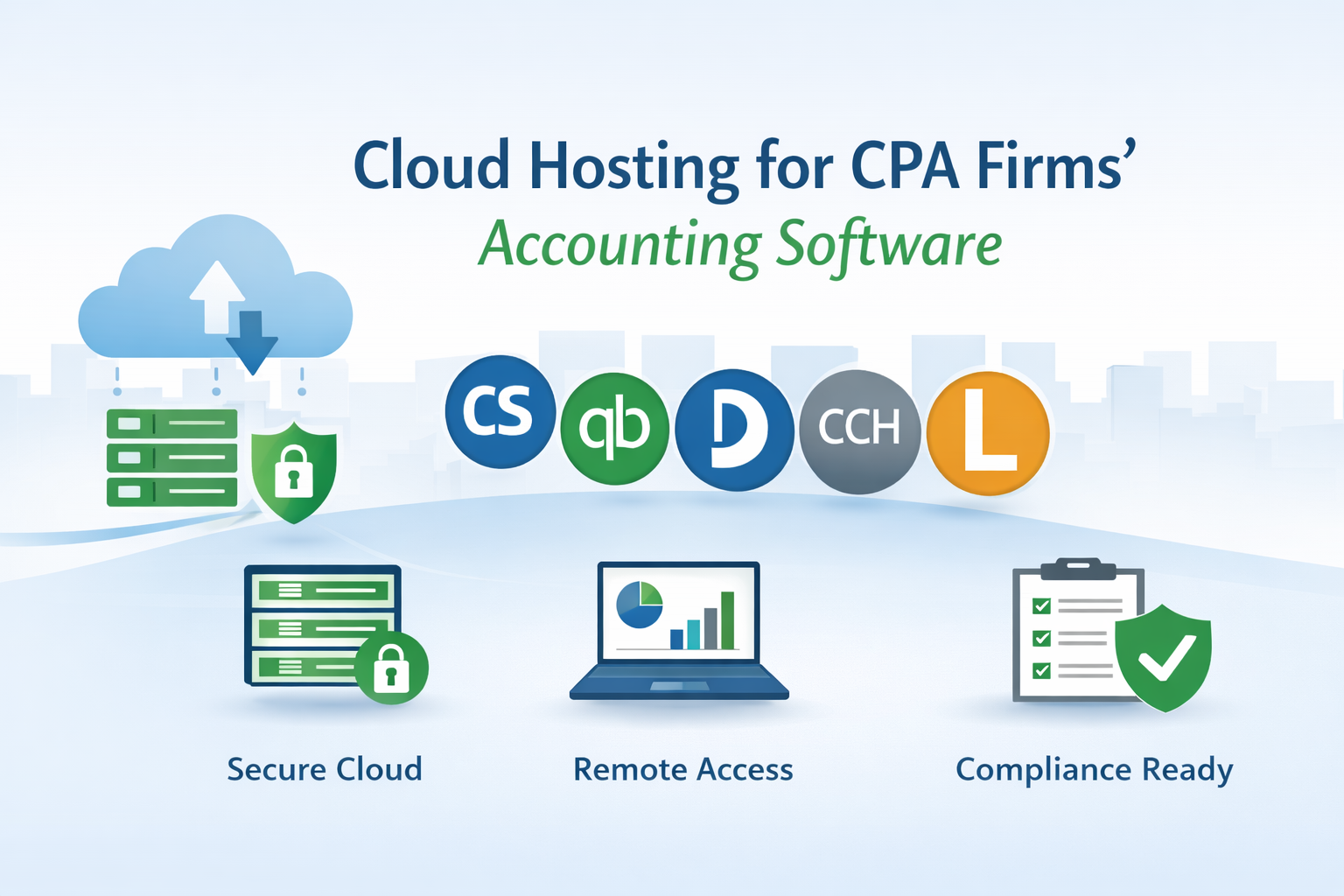
For CPA firms, the cloud conversation has evolved. The question is no longer whether to move—it’s how to do it without disrupting daily operations or compromising accounting software performance.
The biggest challenge lies in integrating legacy accounting platforms like UltraTax, QuickBooks Desktop, Drake, CCH, and Lacerte into a secure, stable, and accessible cloud environment. These systems are foundational to firm workflows, yet they don’t always function well in generic cloud or hosted setups.
Why Software Configuration Matters
Accounting applications have highly specific technical requirements:
-
QuickBooks Desktop depends on precise file locking and multi-user permissions
-
UltraTax and Lacerte require low-latency environments and tightly controlled update management
-
Drake and CCH ProSeries can be sensitive to remote access configurations
If these details aren’t handled correctly, firms experience slow performance, access conflicts, and instability—often during peak filing season.
This is why CPA firms need an MSP that deeply understands accounting software, from licensing rules to compatibility testing, and can configure these platforms correctly in the cloud.
Remote Work That Actually Works
Today’s CPA firms expect staff to work securely from anywhere—whether that’s full-time remote, hybrid schedules, or after-hours access during busy seasons.
The right MSP supports this by:
-
Deploying secure virtual desktops or remote application platforms
-
Implementing granular, role-based access controls
-
Maintaining encryption, compliance logging, and full user activity visibility
When done correctly, remote access becomes seamless—without sacrificing security or performance.
Secure Auditor Access Without Losing Control
Audits and reviews often require granting temporary access to outside professionals. A CPA-ready cloud platform should support:
-
Time-bound permissions
-
Multifactor authentication and session monitoring
-
Clearly logged access trails for compliance documentation
This allows firms to collaborate efficiently while maintaining full control over sensitive data.
Bottom line: Cloud success for CPA firms starts with software-first thinking, not infrastructure-first shortcuts.